Kuurdak — The Original Kyrgyz Stir-Fry
Kuurdak takes its name from a Kyrgyz verb meaning "to fry." It is one of the oldest dishes in the country’s repertoire, born in a time when a slaughtered animal had to be preserved and eaten quickly, and cooks reached for the simplest solution: a hot pan, a lot of onion, and the offcuts of the day.
A Dish Born of Necessity
On the pastures of the Ala-Too, autumn was slaughter season. Families gathered to prepare a sheep or a horse for winter, and every part of the animal had a purpose. Kuurdak was the meal cooked from the freshest, most perishable cuts — liver, kidney, heart, and lung — pan-fried immediately over a hot fire so nothing was wasted. Today the dish is usually made with tender mutton or beef, but its character is unchanged: intense, unfussy, and deeply savory.
The Method
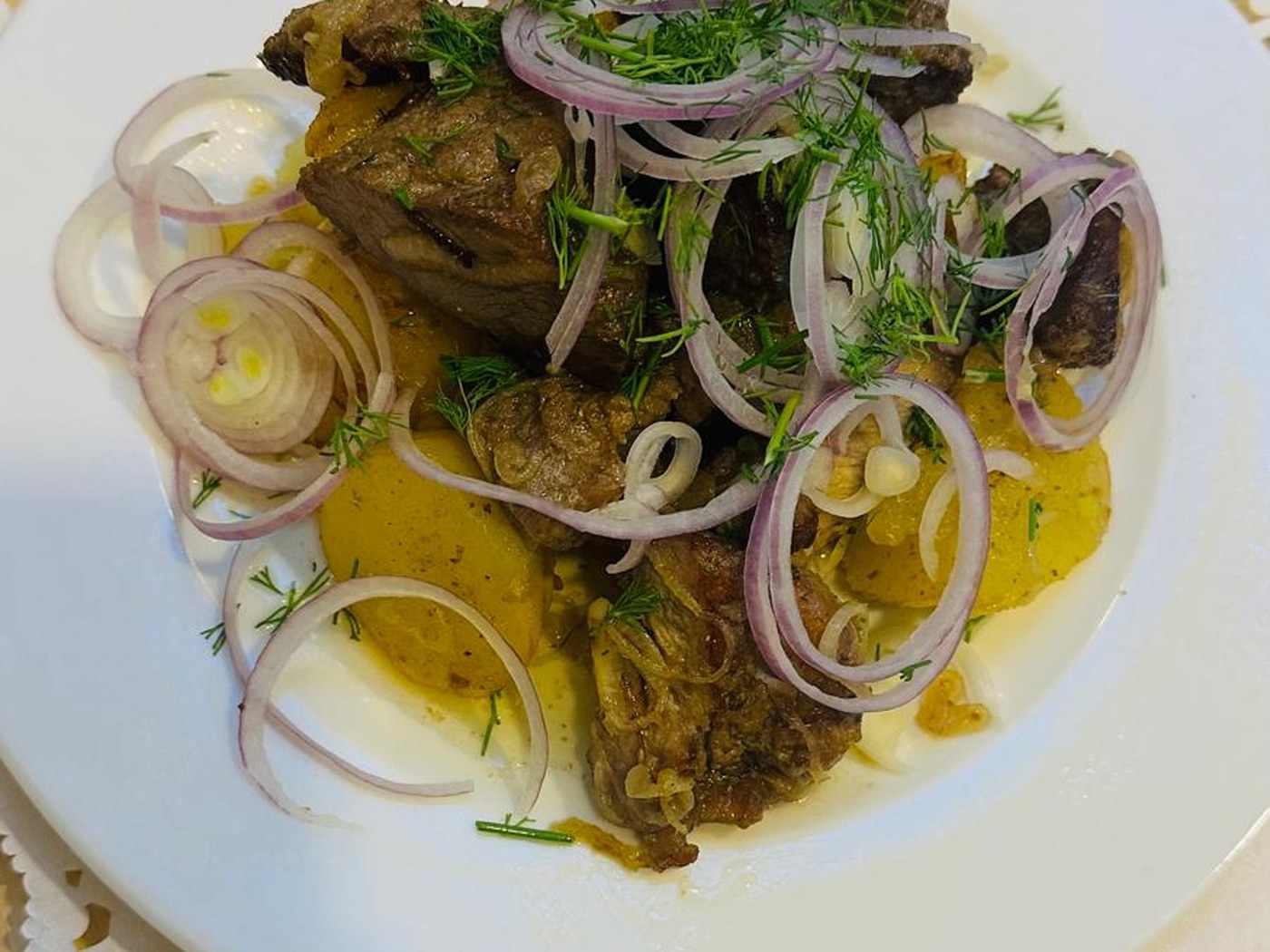
A good kuurdak asks for little more than a heavy pan and patience. The meat is cut into small cubes and seared over high heat in its own rendered fat until the exterior is caramelized. Sliced onion goes in next, in a quantity that seems excessive until it collapses into the meat. Potato cubes are added last, allowed to crisp on the outside while soaking up the fond. Salt, pepper, and a pinch of cumin are the only seasonings a traditional cook needs.
On the Table
Kuurdak is a dish for cold evenings. It is served straight from the pan, sometimes with a lid of soft dough laid over the top to steam through, sometimes with a scattering of dill and green onion. Flatbread and a plain tomato-cucumber salad round out the meal. It has the deep, honest flavor of food that was invented on the move — the kind of plate that reminds you why the herders of the Tian Shan can spend all day in the saddle and come home hungry.
Find Kuurdak on our Main Dishes menu.