Manty — The Steamed Dumpling of Central Asia
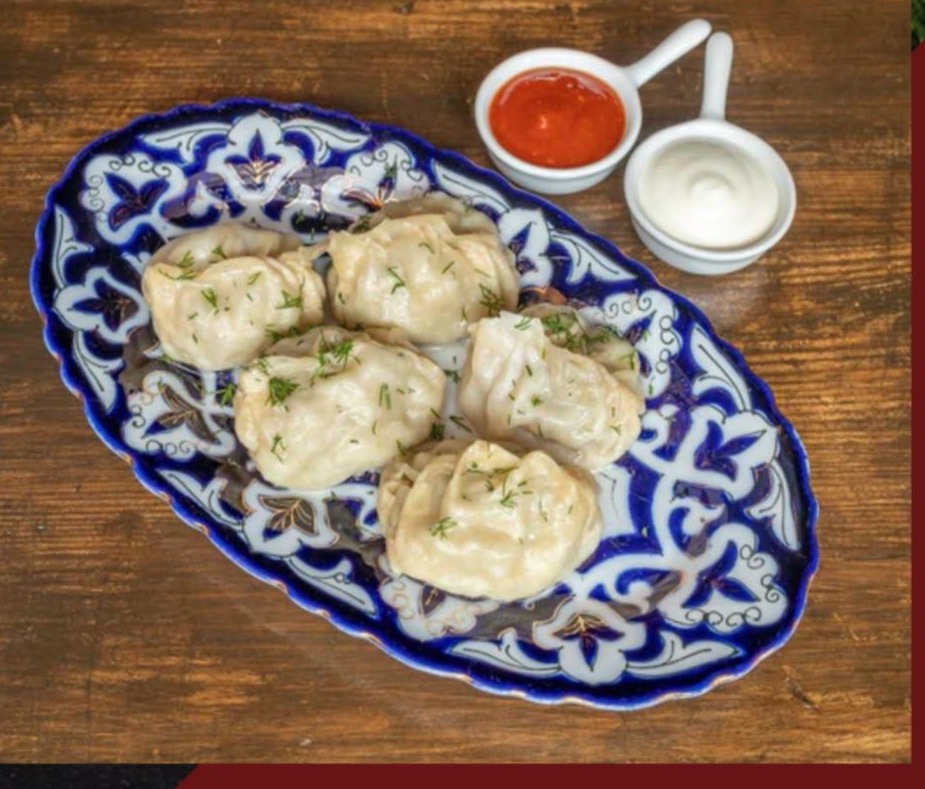
Manty are the great cross-border dumpling of Central Asia. Every kitchen from Bishkek to Samarkand has its own way of folding them, but the essentials are always the same: a thin square of unleavened dough, a generous spoon of seasoned meat and onion, and a long, patient steaming that turns the wrapper glassy.
A Journey Along the Silk Road
The lineage of manty traces back through the caravan routes that connected China to the Fergana Valley. Chinese cousins like baozi and jiaozi share the same idea — dough around a savory filling — but as the recipe traveled west it grew in size, gained onion in generous proportion, and settled into the steamed form Kyrgyz cooks know today. The result is a dumpling that feels distinctly nomadic: hearty enough to be a meal on its own, portable enough for a shepherd’s lunch.
Filling and Folding
Traditional manty use hand-chopped lamb or beef mixed with a nearly equal weight of onion. The onion is important — it releases moisture as the dumpling cooks, keeping the filling juicy and softening the richness of the meat. A pinch of black pepper, cumin, and salt is usually all the seasoning it needs. The dough is rolled thin, cut into palm-sized squares, and folded with a distinctive pleat that gathers the corners toward the center, leaving a small opening at the top.
Steaming and Serving
Manty are cooked in a mantovarka, a stacked steamer with perforated trays that keeps the dumplings from touching one another. Cooking takes around forty minutes over gentle heat — long enough for the dough to become tender without splitting. They are served hot, brushed with a little butter, and paired with sour cream, tomato sauce, or a splash of vinegar. In our kitchen we pleat every dumpling by hand, keeping the tradition of a slow, considered filling and a wrapper thin enough to see the meat through.
Find Manty on our Pastries menu.