Plov — Central Asian Rice, Cooked in a Kazan
Plov (or osh, as it is called in Kyrgyz) is the celebration dish of Central Asia. Weddings, holidays, and Friday afternoons all belong to the plov cauldron. It looks unassuming — rice, meat, carrots — but the process behind it is exact, and the result is something no ordinary rice dish achieves.
The Kazan and the Zirvak
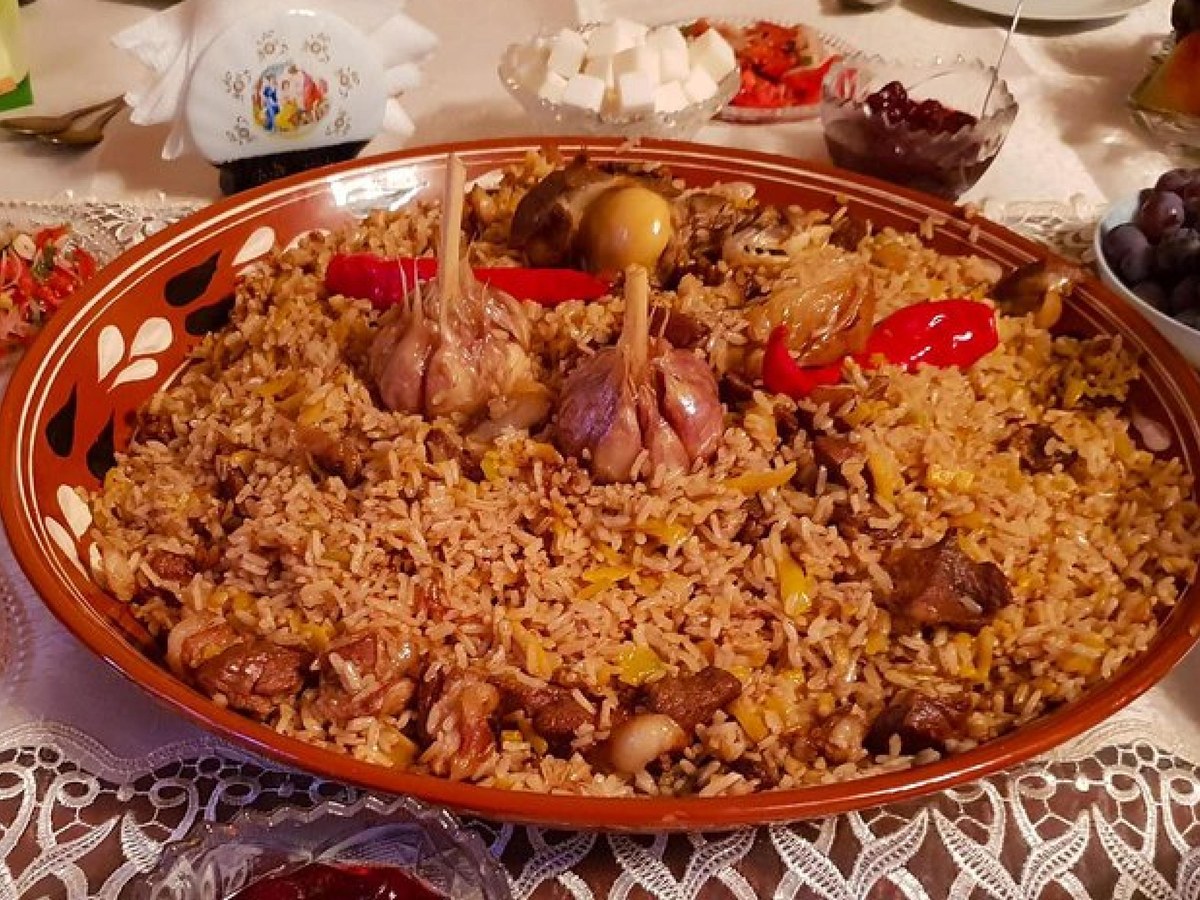
Plov begins in the kazan, a thick iron pot that has been used for centuries because its heavy base spreads heat evenly and holds it for hours. The first stage is the zirvak: mutton or beef is browned in hot fat, then layered with sliced onion and thick batons of yellow carrot. Water, salt, cumin, coriander, and often a whole head of garlic or a handful of dried barberries go in next. The zirvak is left to simmer until it becomes a fragrant, orange-tinted broth.
Rice, Layered Not Stirred
A good plov is measured in the quality of its rice. Devzira, a long-grain variety grown in the Fergana Valley, is prized for its ability to absorb the zirvak without turning soft. The rice is rinsed, spread in an even layer over the meat and carrots, and topped with just enough water to cook it through. From this point the pot is never stirred. As the rice steams, the flavors move upward: each grain absorbs the broth, the fat, and the cumin, while the meat below stays tender.
Regional Styles
Every city in Central Asia claims the definitive plov. Tashkent plov is buttery and bright, often topped with quail eggs and horse sausage. Samarkand plov keeps the layers separate on the platter — meat, carrots, rice — for the guest to combine at the table. Kyrgyz plov leans on local mutton and mountain herbs. In our kitchen the kazan comes out early in the morning; by service time, the layers have had hours to marry, and the rice carries the color and warmth of the carrot below.
Find Plov on our Main Dishes menu.