Samsa — Baked Pastries from the Tandoor
Samsa are the handheld pastry of Central Asia. You find them stacked on trays at every bazaar, still warm from a wood-fired tandoor, wrapped in paper and eaten on the walk home. They are cousins of the Indian samosa, but the technique is different — samsa are baked, not fried, and the pastry is layered and flaky rather than crisp and thin.
A Tandoor at the Heart of the Bakery
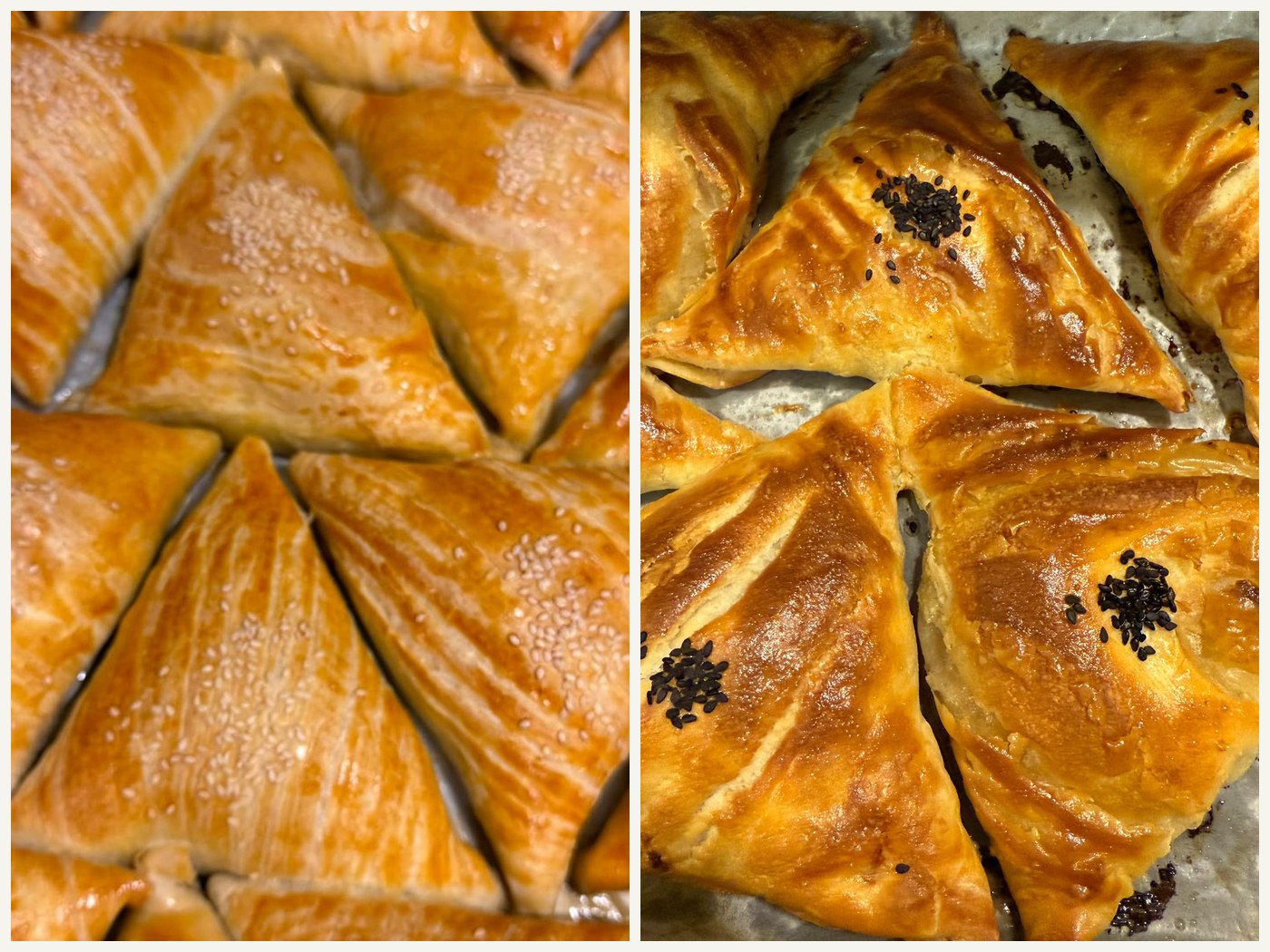
The traditional oven for samsa is a tandoor — a clay-lined pit that reaches temperatures a domestic oven cannot match. The baker slaps each raw pastry directly onto the hot wall of the tandoor, where it clings until the top blisters and the bottom takes on the color of dark caramel. In a matter of minutes the filling steams, the pastry crackles, and the whole thing is pulled out with a long hook. The signature glossy top is glazed with a beaten egg or milk wash just before baking.
Fillings, Sweet and Savory
Meat samsa are the most common — cubes of lamb or beef mixed with plenty of onion, black pepper, and a small piece of tail fat that melts in the oven and keeps the filling moist. In autumn, bakers make samsa filled with sweet pumpkin, sometimes with a little sugar and cinnamon. There are also potato and cheese versions, and small triangular samsa scented with cumin. Whatever the filling, the pastry is the star: it is folded and rested several times to build the layers that shatter when you take the first bite.
How to Eat One
Samsa are hand food. They are eaten standing up at the market, at breakfast with tea, and at the start of every family meal. A properly baked samsa should be crisp enough to leave crumbs on your plate and moist enough inside that the first bite steams a little. In our kitchen the pastry is laminated in-house and baked to order, so the crust arrives at the table with the same lacquered top you see on the street of a Bishkek Sunday market.
Find Samsa on our Pastries menu.